Review management software for UK small businesses — the 3.9-star problem
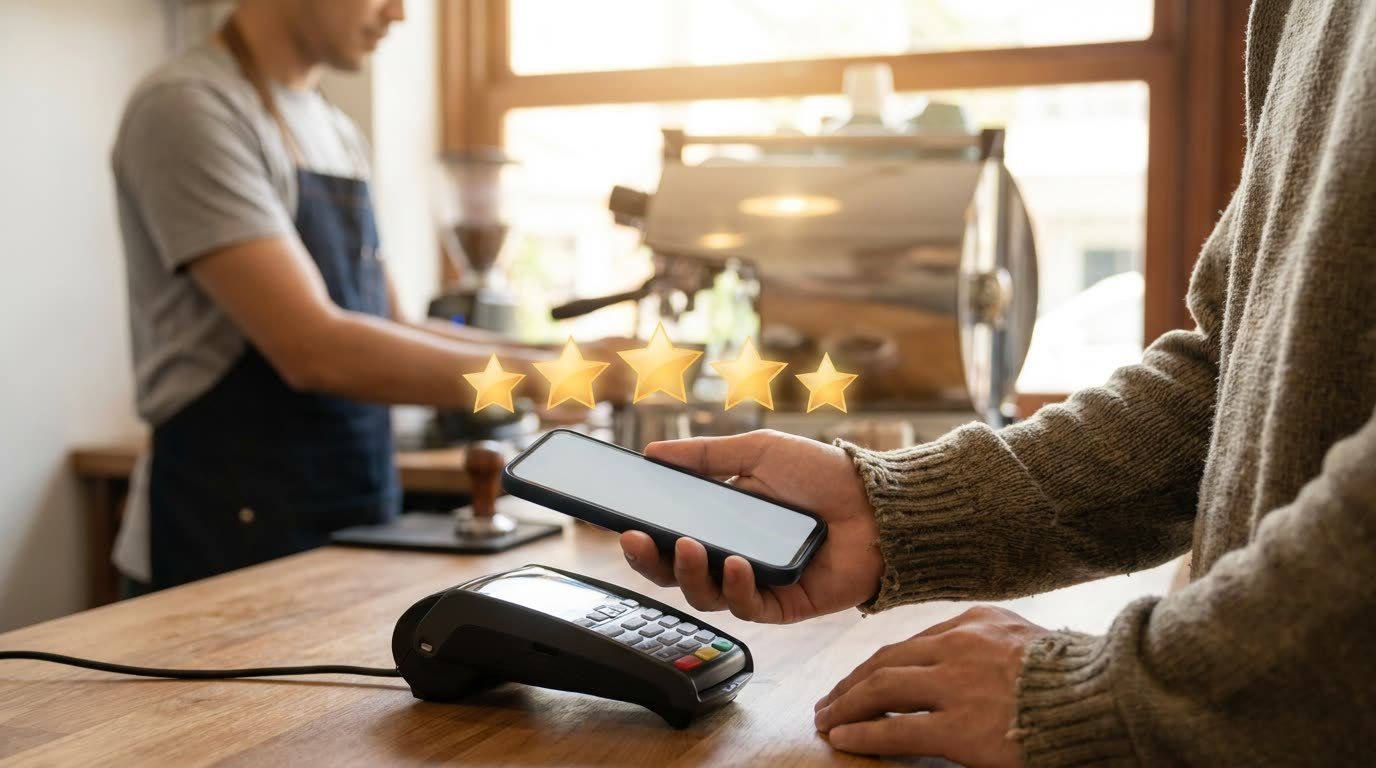
What does review management software do? It automates the review ask — SMS or WhatsApp within hours of a completed job, a one-tap link to your Google form — and pulls every incoming review into one inbox. The result, typically, is 3–5× more reviews within 90 days and a star average that finally reflects the actual service.
Most UK small businesses deserve 4.5 stars and sit closer to 3.9. The gap isn't service quality — it's the timing of the ask. Unhappy customers review without prompting; happy customers mean to, then forget. The result is a rating that undersells the business to every potential customer who searches for it.
Why the rating matters more than you think
Google's local pack weighs review count and average heavily — a business with 80 reviews at 4.6 will outrank one with 12 at 4.8, all else equal. The behavioural data compounds it. BrightLocal's UK consumer research finds: 79% treat online reviews like personal recommendations; only 4% would visit a business below 3.0 stars; 49% need at least 4 stars before they'll use a business at all.
| Garage example | At 3.9★ | At 4.5★ |
|---|---|---|
| Monthly profile visits | 200 | 200 (rising with rank) |
| Visit → call conversion | 8–10% | 12–16% |
| Calls per month | ~18 | ~28 |
That difference — roughly 10 extra enquiries a month — fills three or four bays a week without a pound of ad spend.
Why happy customers don't review without a nudge
Leaving a review is effort with no reward: open Google, find the listing, write something coherent. The window is narrow — response rates peak when the request lands within 24 hours of the experience, drop by around 60% after 48 hours, and fall to near zero after a week. A business serving 40 customers a week with no review system will see perhaps one or two of them ever review.
How the software works
A completed job, finished appointment or processed payment triggers the request automatically — SMS, WhatsApp or email, with a single link straight to the Google review form. No searching, one tap. Better systems add a sentiment step first: a quick rating question that routes an unhappy customer to a private feedback form before anything goes public. It doesn't stop them posting publicly — that would be review gating, which breaches Google policy — but it gives you a chance to fix the issue first.
| Feature | Why it matters |
|---|---|
| Automated requests (SMS/WhatsApp/email) | 3–5× review volume within 90 days |
| One-click review links | Removes friction; higher completion |
| Sentiment filter | Catches issues before they become public 1-stars |
| Multi-platform inbox (Google, Facebook) | Never miss a review; fast responses |
| AI response suggestions | Consistent professional tone in seconds |
| CRM integration | Ties reviews to jobs; flags patterns |
Which channel converts best?
SMS and WhatsApp beat email decisively — they're read within minutes, where email requests land in crowded inboxes at ~20% open rates. WhatsApp follow-ups in an existing opted-in conversation see read rates above 90%. The optimal sequence: SMS/WhatsApp within 2–4 hours of completion, one email follow-up at 48 hours, then stop — more than two nudges tips into annoyance. (Marketing consent under PECR applies — capture it at booking.)
Responding is half the job
Google treats response activity as a ranking signal, and prospects read your replies as closely as the reviews. The principles: respond within 24 hours to everything; name the reviewer; acknowledge specifics ("sorry the wait ran long") rather than deflecting ("sorry you feel that way"); move resolution to a direct channel; never argue publicly. A thirty-second personalised thank-you on positive reviews builds a brand voice no advertising replicates.
What's allowed in the UK — and what isn't
Legal and encouraged: asking for honest reviews, one-tap links, staff mentioning reviews in person, automated reminders to opted-in customers. Prohibited (Google policy + CMA guidelines, with real enforcement): paying or discounting for reviews, fake reviews from staff or friends, review gating, and requesting reviews from people who never used the service. Artificial patterns are increasingly detectable by both Google and the CMA.
FAQ
What is review management software? A system that auto-sends review requests after each job, monitors Google/Facebook in one inbox, and manages responses — lifting both review count and star average.
How do I get more Google reviews for my UK small business? Automated SMS/WhatsApp requests within 24 hours of the job, with a one-tap link to your review form.
Can I legally ask customers for Google reviews in the UK? Yes — honest asks are fine; incentivised or fake reviews breach Google policy and CMA guidelines.
Does a higher Google star rating actually increase sales? Yes — 49% of consumers require 4+ stars, and higher ratings lift both search ranking and profile-to-call conversion.
How do I respond to negative reviews professionally? Respond within 24 hours, address the reviewer by name if possible, acknowledge the specific experience without admitting liability, and invite them to contact you directly to resolve it. Never argue publicly — other potential customers read your response as much as the review itself.